

 503-558-2045
Is Your Furnace Safe? Why Carbon Monoxide (CO) Testing Matters This Winter
Cornel's Plumbing, Heating & Air Conditioning Services
Locally Trusted 20+ Years
Upfront Honest Pricing
Skilled & Certified Techs
Is Your Furnace Safe? Why Carbon Monoxide (CO) Testing Matters This Winter
When temperatures drop in Portland most people adjust their central air system to heat without a second thought, but as your furnace kicks in, there is one hidden danger: carbon monoxide (CO). This odorless, colorless, and extremely dangerous gas can leak from malfunctioning furnaces and compromise the safety of your home. Every winter, CO poisoning sends thousands of people nationwide to the emergency room—many cases originating from faulty heating equipment. That’s why having a professional furnace inspection that tests for CO before winter isn’t just recommended… it’s essential. Cornel’s Plumbing, Heating & Air puts CO safety at the top of every furnace tune-up, and here’s exactly why it matters. Schedule your CO safety inspection with Cornel’s Plumbing, Heating & Air TodayWhat Is Carbon Monoxide (CO) and How It Forms in Your Furnace
Carbon monoxide is a toxic gas produced when fuel—like natural gas, propane, or oil—does not burn completely. A properly functioning furnace should produce minimal CO and send it safely through the flue and out of your home. However, several furnace issues can cause CO levels to rise or leak inside your home:- Dirty or clogged burners preventing complete combustion
- Cracked heat exchanger, which can allow CO to mix with indoor air flow
- Blocked, rusted, or disconnected flue pipes
- Improperly adjusted gas pressure
- Poor ventilation or airflow restrictions
- Soot buildup, which disrupts burner performance (as seen in Cornel’s “Excessive Furnace Soot” case study)
- These problems often develop slowly over time, which is why annual inspections are crucial.
Why Carbon Monoxide Is So Dangerous
Even low levels of carbon monoxide exposure can cause health problems, and high levels can become deadly within minutes. Symptoms of CO exposure include Symptoms of carbon monoxide exposure can be subtle at first and often resemble common illnesses, which is why CO is so dangerous. Early signs typically include headache, nausea, dizziness or lightheadedness, and shortness of breath. As exposure increases, people may experience chest pain, disorientation or confusion, and an overwhelming sense of unusual fatigue. These symptoms can escalate quickly, making prompt recognition and immediate action critical. Book A Furnace Maintenance Call NowCO vs. CO₂: Why the Difference Matters
Clients sometimes confuse carbon monoxide (CO) with carbon dioxide (CO₂). CO₂ testing is part of combustion analysis for efficiency. CO testing is a safety procedure that checks for dangerous leaks. For homeowner safety, CO is the critical gas that must be checked during a furnace tune-up.How Technicians Test for CO During a Furnace Tune-Up
Professional CO testing isn’t just a quick detector check—it’s a systematic process performed with calibrated instruments. At Cornel’s, technicians follow several steps to ensure your furnace is safe:- Ambient CO Testing A technician starts by measuring CO levels in the air around your furnace while it’s running and idle. Any detectable CO indoors is cause for further investigation.
- Flue Gas Analysis Using a combustion analyzer, the technician measures: CO levels inside the flue; Oxygen (O₂) levels; Combustion efficiency; Stack temperature. This test determines if the furnace is burning fuel safely and cleanly.
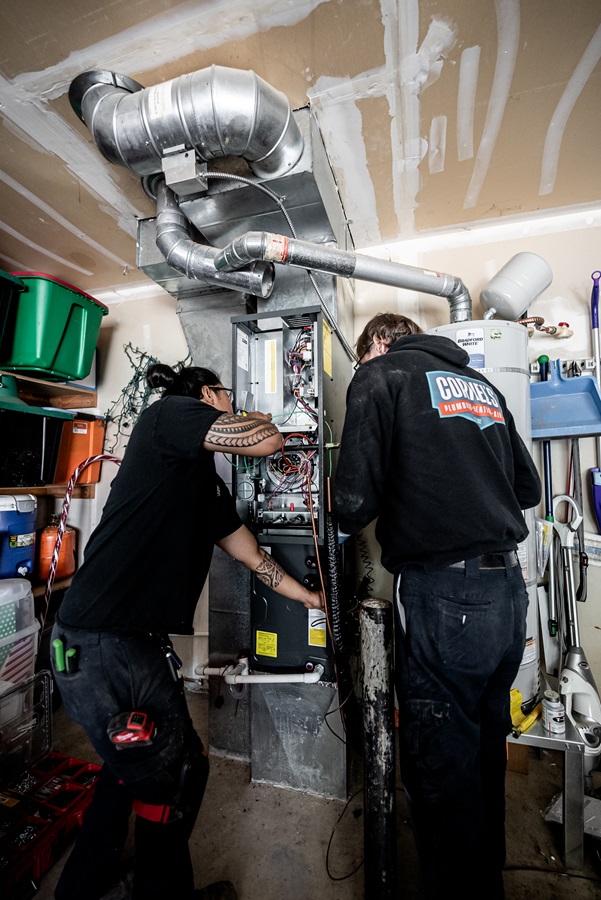
- Heat Exchanger Inspection Cracked or damaged heat exchangers are a top cause of CO leaks. Techs visually inspect and use flashlights, mirrors, or cameras to find early signs of failure.
- Venting and Draft Testing Blocked, rusted, or improperly sloped vent pipes can trap CO indoors. The technician confirms proper airflow and draft strength.
- Safety Control & Ignition Check Malfunctioning ignition systems and safety switches can cause incomplete combustion. These are tested and calibrated.
- System Run Cycle Test Finally, the tech runs the furnace through a full heating cycle to verify: Stable burn; No unusual flame color changes; No hazardous CO readings. This meticulous approach is why CO testing should always be left to trained HVAC professionals—not DIY tools.
Warning Signs Your Furnace Might Be Leaking CO
Physical or operational signs
- Yellow or flickering burner flame (A healthy gas flame should be mostly blue.)
- Soot buildup around the burner, vents, or furnace cabinet
- Burning smells, especially metallic or smoky odors
- Rust or white residue on vent pipes
- Excessive condensation on windows or near the furnace
- Pilot light that frequently goes out
- Unusual noises like rumbling or popping during burner ignition
Human symptoms (occur indoors only)
- Headaches that improve when you go outside
- Dizziness or nausea at home but not elsewhere
- Confusion or fogginess
CO Safety Checklist for Homeowners
| CO Safety Task | Completed? |
|---|---|
| Install CO detectors on every level of your home | ⬜ |
| Replace CO detector batteries annually | ⬜ |
| Schedule a professional furnace tune-up with CO testing | ⬜ |
| Keep furnace and flue area clear of debris | ⬜ |
| Check for visible rust, soot, or discoloration around vents | ⬜ |
| Confirm furnace has a strong blue flame (not yellow) | ⬜ |
Preventive Maintenance: How to Avoid CO Problems Altogether
Your furnace can run safely and efficiently for years—but only with consistent care.Here’s how to reduce CO risks
Get an annual furnace tune-up
This is the #1 way to prevent CO leaks. Professional cleaning, burner tuning, and flue checks are critical.Replace air filters regularly
Clogged filters restrict airflow, which leads to overheating and incomplete combustion.Never block furnace vents or returns
Restricted airflow can cause dangerous pressure buildup.Keep chimneys and flues clear
Bird nests, leaves, and debris are common causes of vent blockages.Upgrade older furnaces
Systems over 15–20 years old are more prone to heat exchanger cracks and should be inspected closely. Cornel’s technicians take safety seriously and always include CO checks as part of their comprehensive winter tune-ups.Why Portland Homeowners Trust Cornel’s for Furnace CO Testing
Cornel’s Plumbing, Heating & Air has earned a reputation for precise, reliable furnace safety inspections. Portland homeowners trust them because:- Every tune-up includes detailed CO testing
- Technicians are licensed, certified, and trained in combustion analysis
- They understand unique Northwest furnace issues like soot buildup, moisture-related corrosion, and older venting systems
- Service is fast, honest, and highly thorough
Frequently Asked Questions (FAQs)
- What CO level is considered dangerous? Any indoor CO reading above 9 ppm (parts per million) is a concern. Levels above 35 ppm can cause symptoms, and 100+ ppm is dangerous and potentially life-threatening. Your home should have zero measurable CO under normal conditions.
- How often should my furnace be tested for CO? Once per year. Ideally, schedule CO testing every fall, before the heating season begins. Older furnaces or systems with prior issues may need more frequent checks.
- Do CO detectors replace professional furnace CO testing? No. CO detectors protect you from acute danger, but they do not identify small leaks, combustion issues, or heat exchanger cracks. Only professional testing can verify furnace safety.
- What does a cracked heat exchanger mean for CO safety? A cracked heat exchanger can allow combustion gases—including CO—to mix with indoor air. It’s a serious safety hazard and often requires furnace replacement.
- Is CO testing included in a Cornel’s furnace tune-up? Yes. Cornel’s technicians perform CO checks, combustion analysis, venting inspections, and safety tests as part of every standard furnace tune-up.
Stay Safe This Winter—Schedule Your Furnace CO Test Today
Carbon monoxide is a silent, invisible danger—but with the right precautions, it’s completely preventable. A professional furnace tune-up with CO testing ensures your heating system is safe, efficient, and ready for Portland’s winter season. Schedule your CO safety inspection with Cornel’s Plumbing, Heating & Air Today Written by: Hunter Johanson, Licensed HVAC Technician (EPA 608 Certified), Cornel’s Plumbing, Heating & Air Conditioning Reviewed by: Jeff Brown, HVAC Manager, Cornel’s Plumbing, Heating & Air Conditioning Last updated: November 17, 2025
Same Day Service
$50 Off Furnace Repair
License Number: CCB#226109

Receive A Callback In
10 Minutes or less!
(During business hours Mon-Fri 6am-7pm)
Same Day
Plumbing & HVAC
Services
License Number: CCB#226109
Receive A Callback In
10 Minutes or less!
(During business hours Mon-Fri 6am-7pm)
- I just wanted to thank Jake & Colby of Cornel's Plumbing, Heating & Air Conditioning. They did such an amazing job for us today. Completely … view more replaced our water heater in just 2 hours. They were very polite, knowledgeable and just plain good guys. 5 stars for sure.
- Cornell Plumbing and Heating ANSWERED THE CALL! Our furnace crapped out in the winter, it was 20+ years old so we knew it was coming but put it off until … view more it died. We were freezing for less than a day before Cornell quickly responded to our request for an inspection to see if the furnace was fixable. The inspector was very thorough and helped us understand all of the issues with our dead furnace and quickly got us connected to Randy who came over in a matter of minutes to walk through the options. Randy was very very knowledgeable and so friendly. I never felt pressured when talking to him, he was very practical and honest about what would be the best bang for our buck, while ensuring we had a solid heater for decades to come. We were on the fence about installing central AC (our house was built in 1890) but the summers in Portland have gotten so tumultuous that every year for the past four years, we've shopped around for AC quotes but just couldn't afford to commit. Randy built a great package for us that added AC to our furnace for a price that was very reasonable, so, we did it! We have a two year old and a baby on the way and we are very very thankful to know we have cool summers ahead of us and warm winters to enjoy in the comfort of our home. It's been night and day with the new furnace compared to what we were working with before. I never knew how warm our home COULD have been, until we got our new furnace installed. Oddly enough, our neighbors furnace also died like a week later and he saw we had Cornell over and asked about our experience. We were very quick to highly recommend Cornell, and my neighbor also got a new furnace from them! Needless to say, it was a smooth, quick and satisfying experience, you know, as satisfying as it can be to have to suddenly invest in heating and cooling, which can be many tens of thousands of dollars... but with the right folks, and the right system, the experience can be a sort of blessing in disguise - which it was for us!
- Jake was super helpful getting us a new water heater installed today after our very old one went out over the holidays. He was timely and tried a few other … view more solutions before we decided to fully replace it.Jake was Super kind and made sure he fully explained both the issues and the functionality of the new unit in ways that made sense to us and helped us feel confident in not only him but also Cornel’s as a whole. We will definitely keep using them for our heating and AC. Thanks Jake!


Do You Have A Home Service Emergency?
Our goal is to provide expert same-day solutions for all your leaks, clogs, and installations, ensuring a reliable and efficient plumbing system for your home.
#1 For Plumbing Heating & Air in Portland, OR Trusted with over 1500 5-Star Reviews
Do you have a plumbing problem? Is your furnace or air conditioner not working? Need immediate help? Are you looking for a professional you can trust? Call Cornel’s Plumbing, Heating, and Air right away.
Serving residential owners in and around Portland, Oregon, for 40+ years, we are a licensed and Family Owned & Operated company specializing in Plumbing & HVAC services. Our attributes like professionalism, high quality of services, work ethics, and quick assistance have made us a household name and the go-to Portland plumbing service partner.

— Built on Trusted Brands. Installed by Experts. —

Day or Night, Call Cornel’s to Make It Right.
Let us know how we can help you and a member of our expert team will call to schedule your appointment.
Thousands of Portland homeowners trust Cornel’s with their plumbing, heating and air conditioning needs.
Feel free to Call or fill out the form to get started with us today! We look forward to serving you
By submitting, you authorize Cornel's Plumbing Heating and Air to reach out via phone, email, or text for explicit information about project needs. We will never share your personal information with 3rd parties for marketing purposes or spam you. You can opt out at any time. Message/data rates apply. Consent is not a condition of purchase. Terms Of Use | Privacy Policy
Find Out If We're In Your Neighborhood!
Our Service Area covers the greater Portland metro area and more! If you're not seeing your hometown in the map, enter your zip code below or contact us today to learn more!
Business Hours:
| Monday-Friday | 7am-6pm |
| 24/7 Live Scheduling |